 NO.138ANIME
OOTDKyoko Otonashi
NO.138ANIMEANIME OOTD / CHARACTER ARCHIVE
Kyoko Otonashi
Maison Ikkoku ↗ / 1980
Ikkoku resident manager
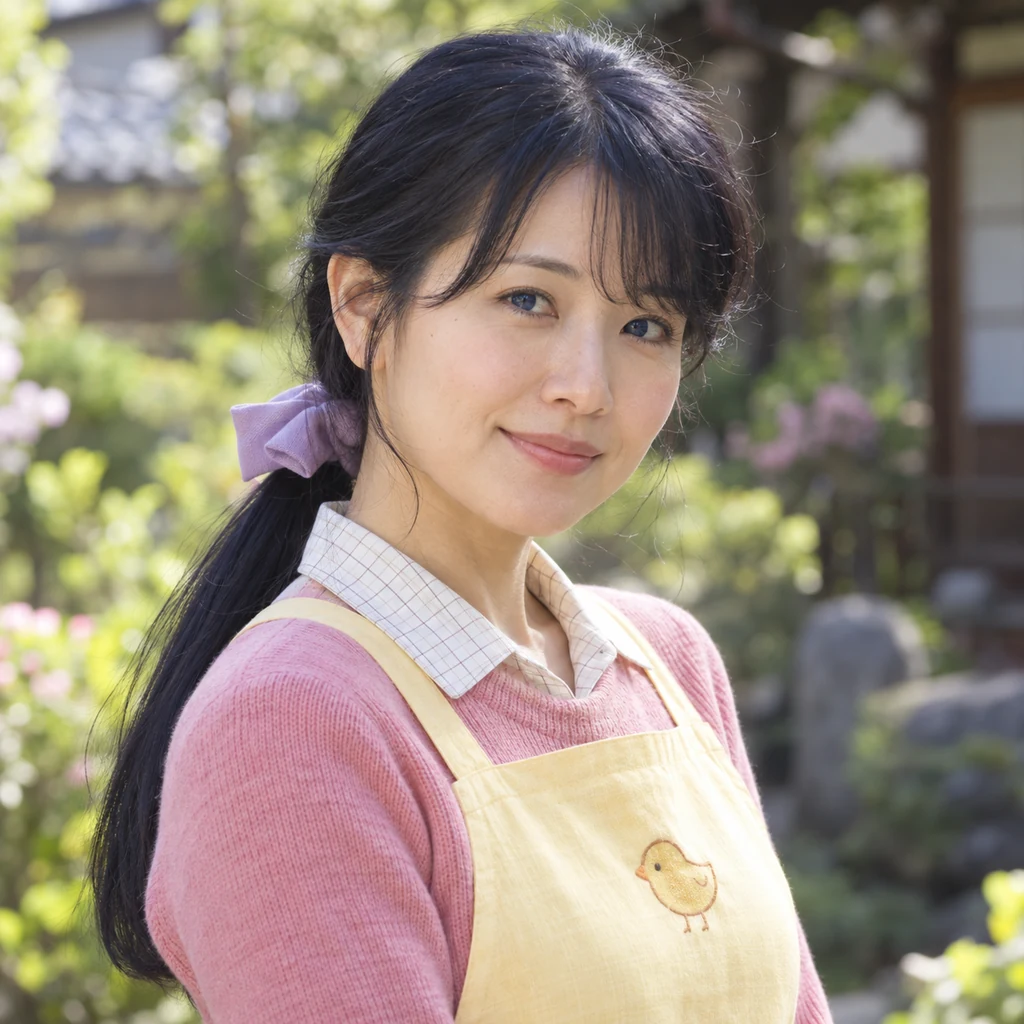
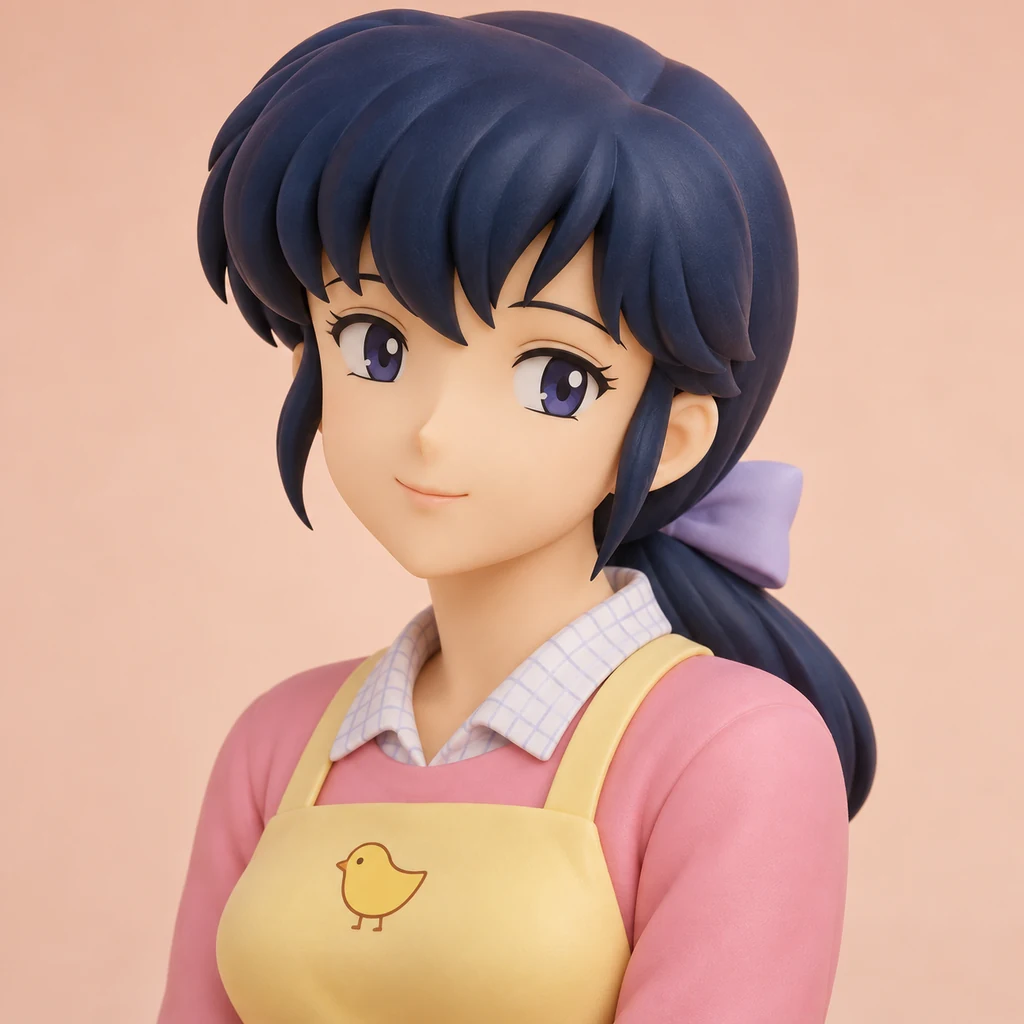




AI-assisted illustrations · Not official anime stills








Kyoko introduces herself by name on page 6 of manga chapter 1, “What Are the Neighbors Doing…!?” She has just become Ikkoku’s manager. Shogakukan dates the series to the November 1980 issue of Big Comic Spirits, establishing 1980 for both character and work. The new edition’s 2007 release is a separate date.
Shogakukan explicitly describes Kyoko as prone to jealousy, giving her warmth an imperfect edge. TV episode 18 shows her taking the initiative in a gentler way: she gives Godai a hand-knitted scarf and is delighted by his gift of a brooch. Small gestures make her feelings tangible.
[Major spoilers: TV ending] In TV episode 95, Kyoko accompanies Godai to his family home in Niigata. His family welcomes her, and his grandmother Yukari gives her a treasured ring. Episode 96 brings their wedding amid cherry blossoms. The relationship becomes a shared future through concrete acts of welcome and commitment.
Godai is the room-five tenant with whom Kyoko develops a romantic bond; tennis coach Mitaka is another suitor. Her late husband Soichiro and the white dog of the same name are different beings: the dog was found by her husband and remains a memento. The unruly tenants keep their romance rooted in communal life.
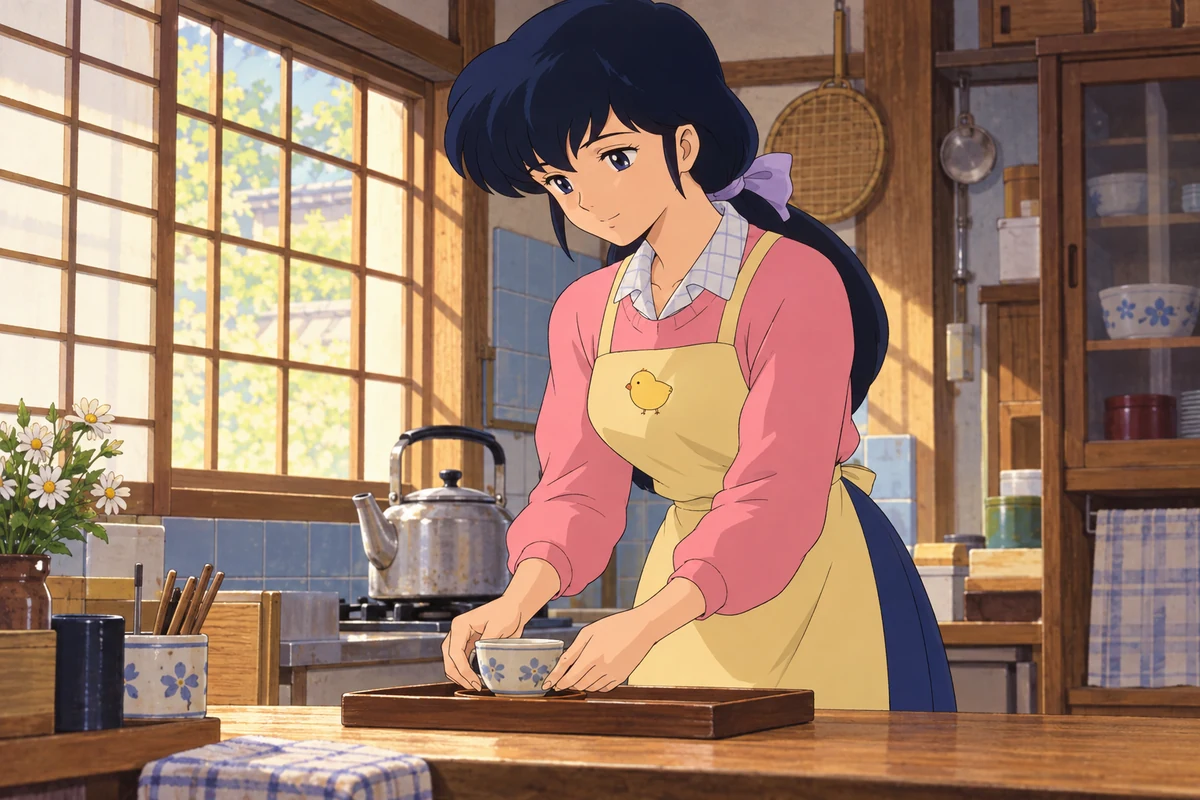
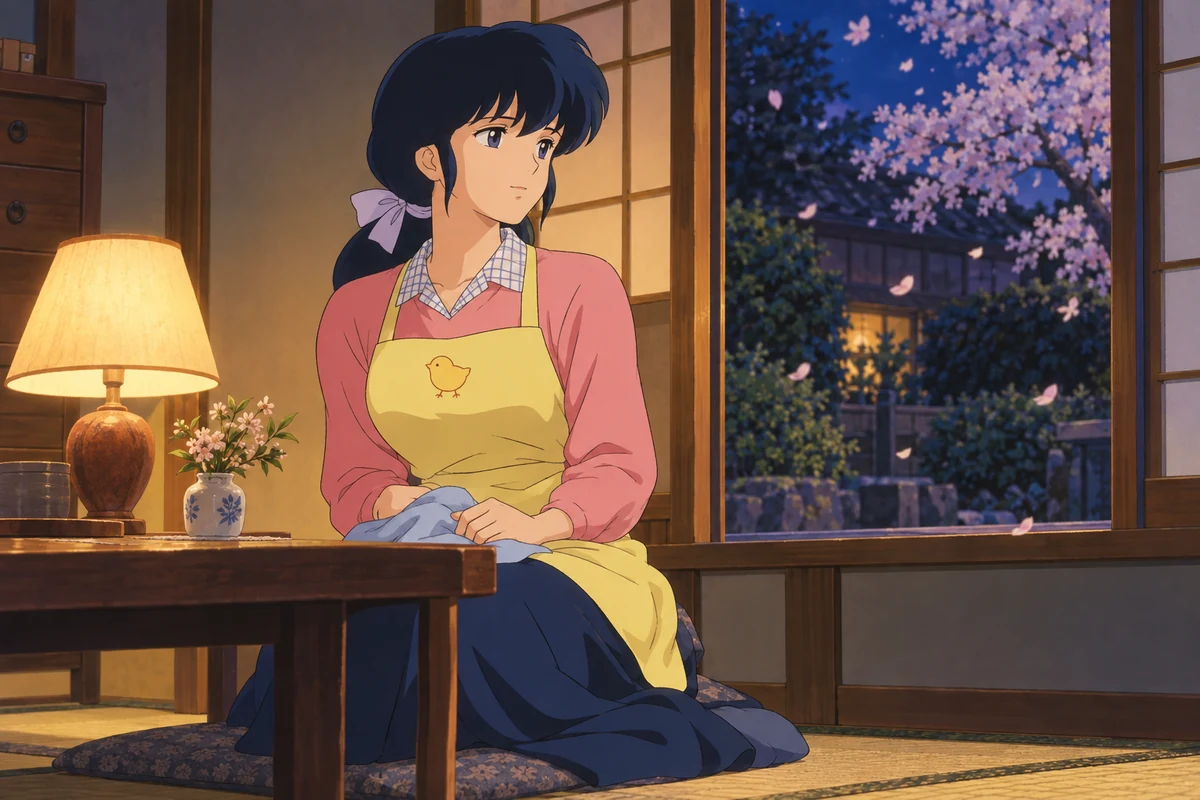
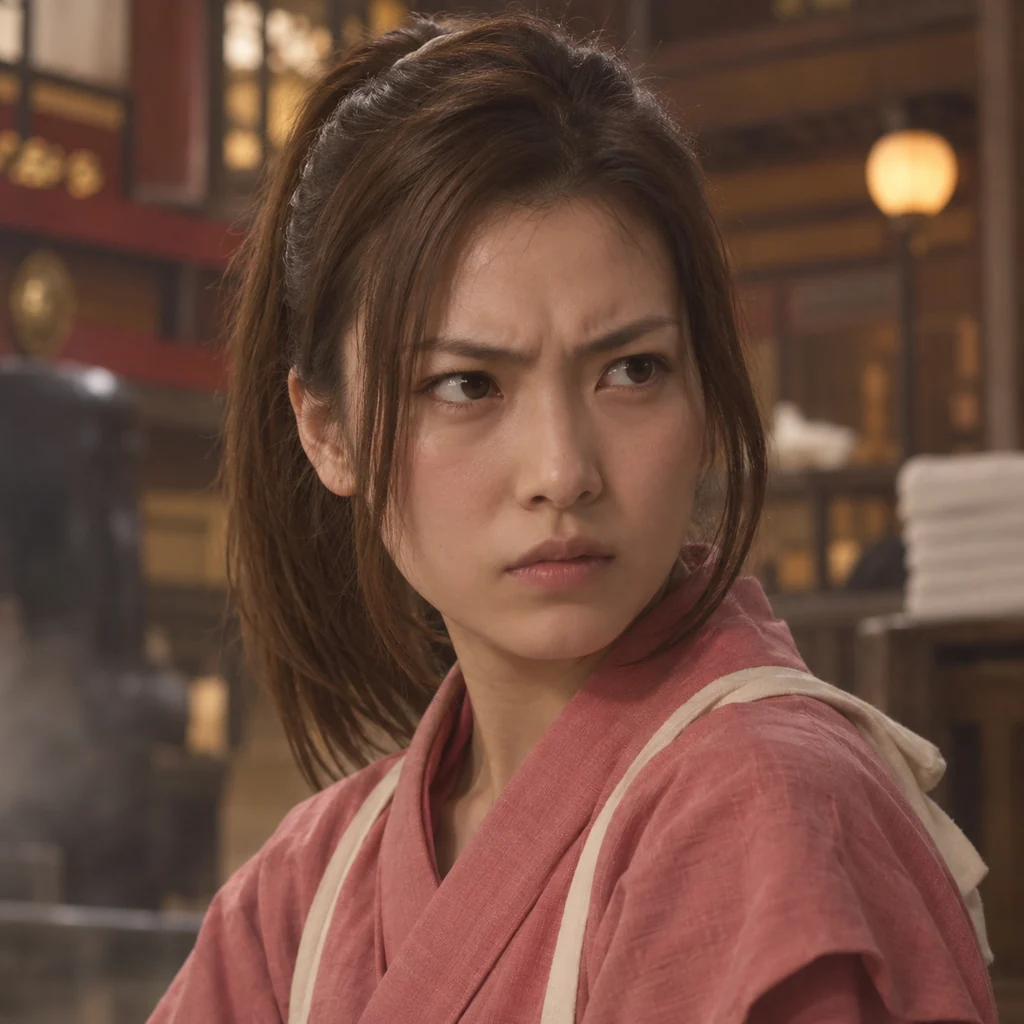
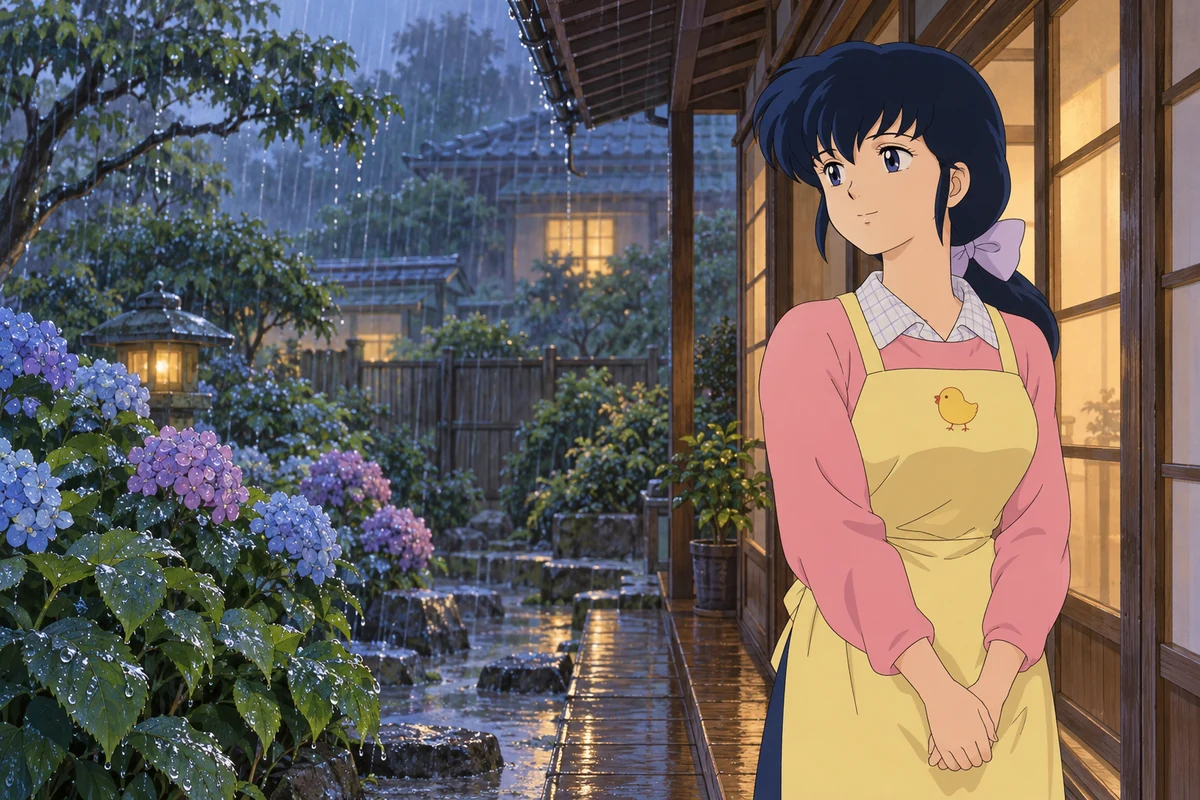
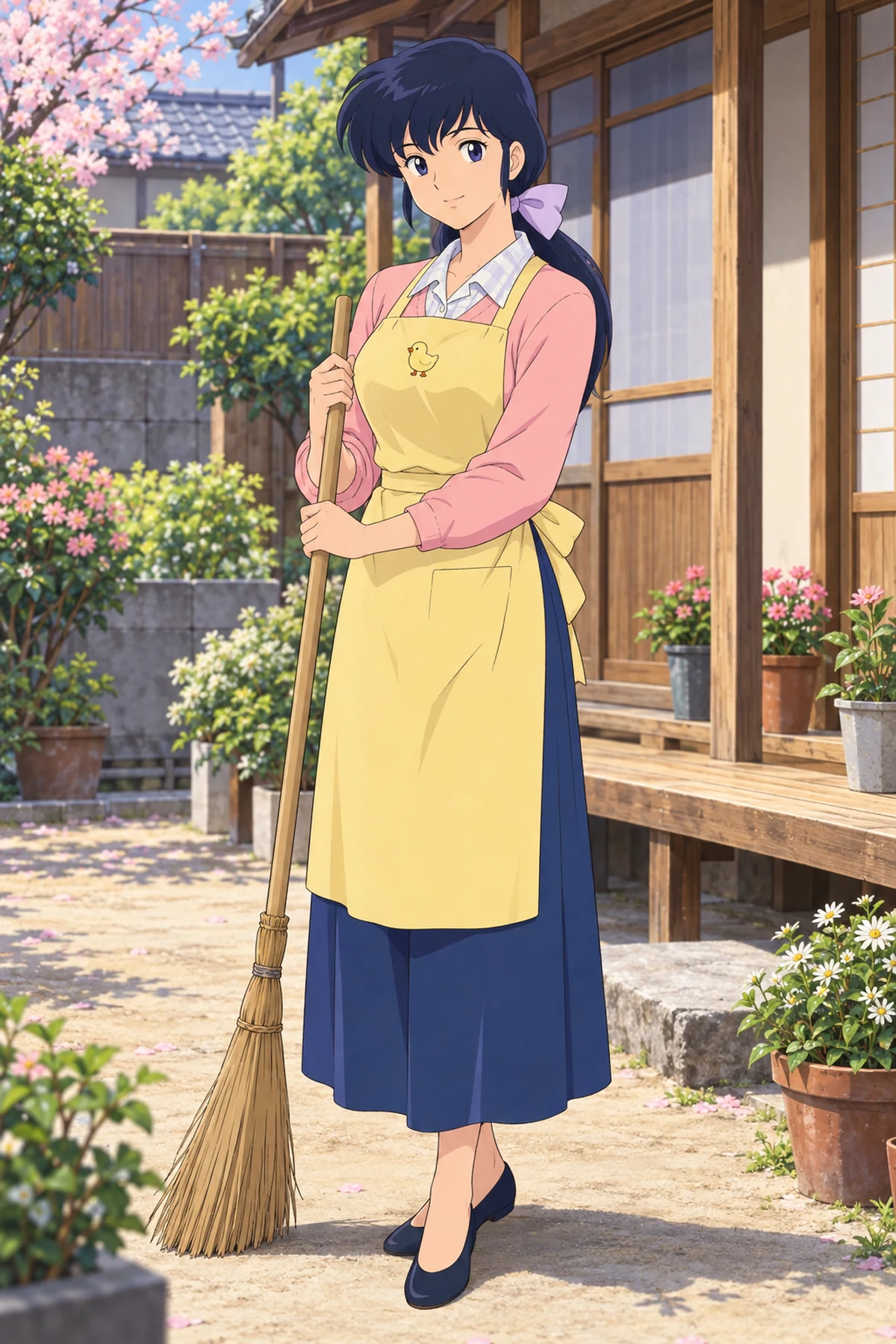
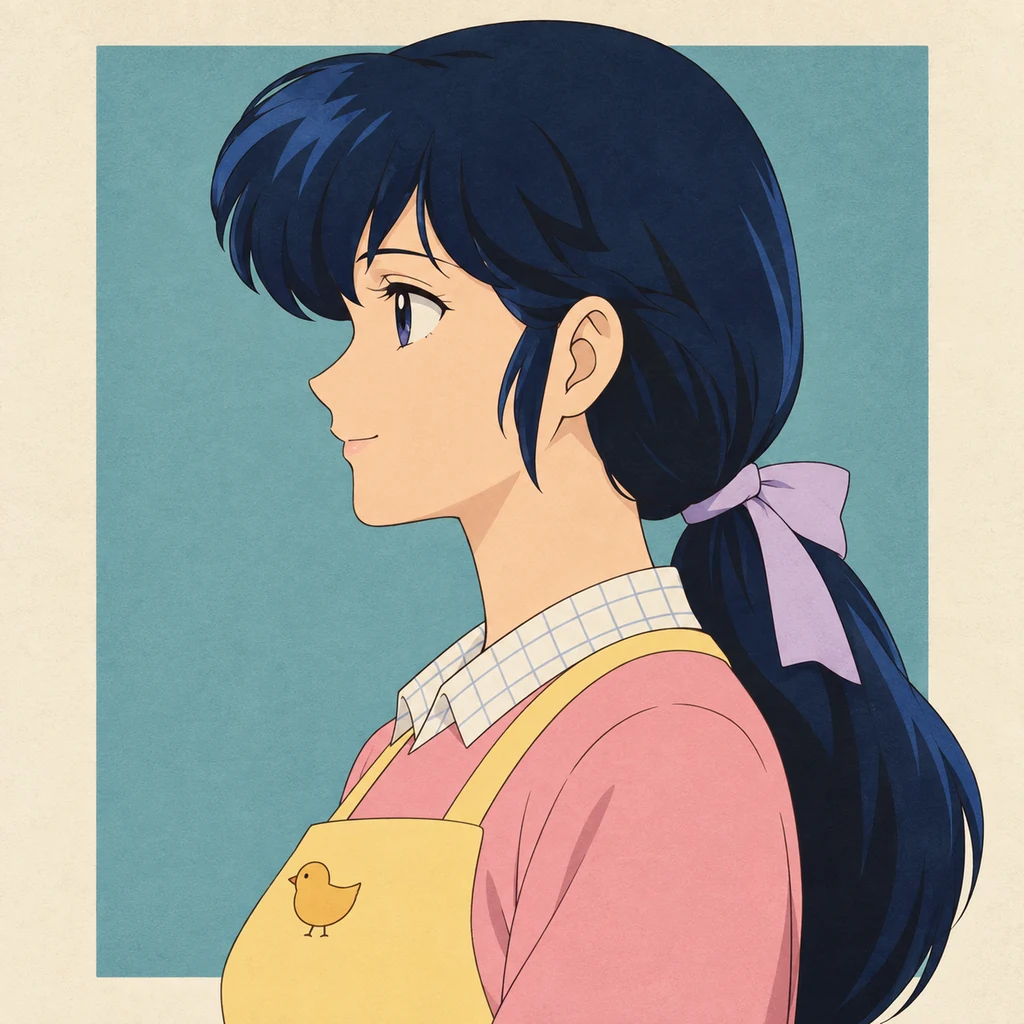
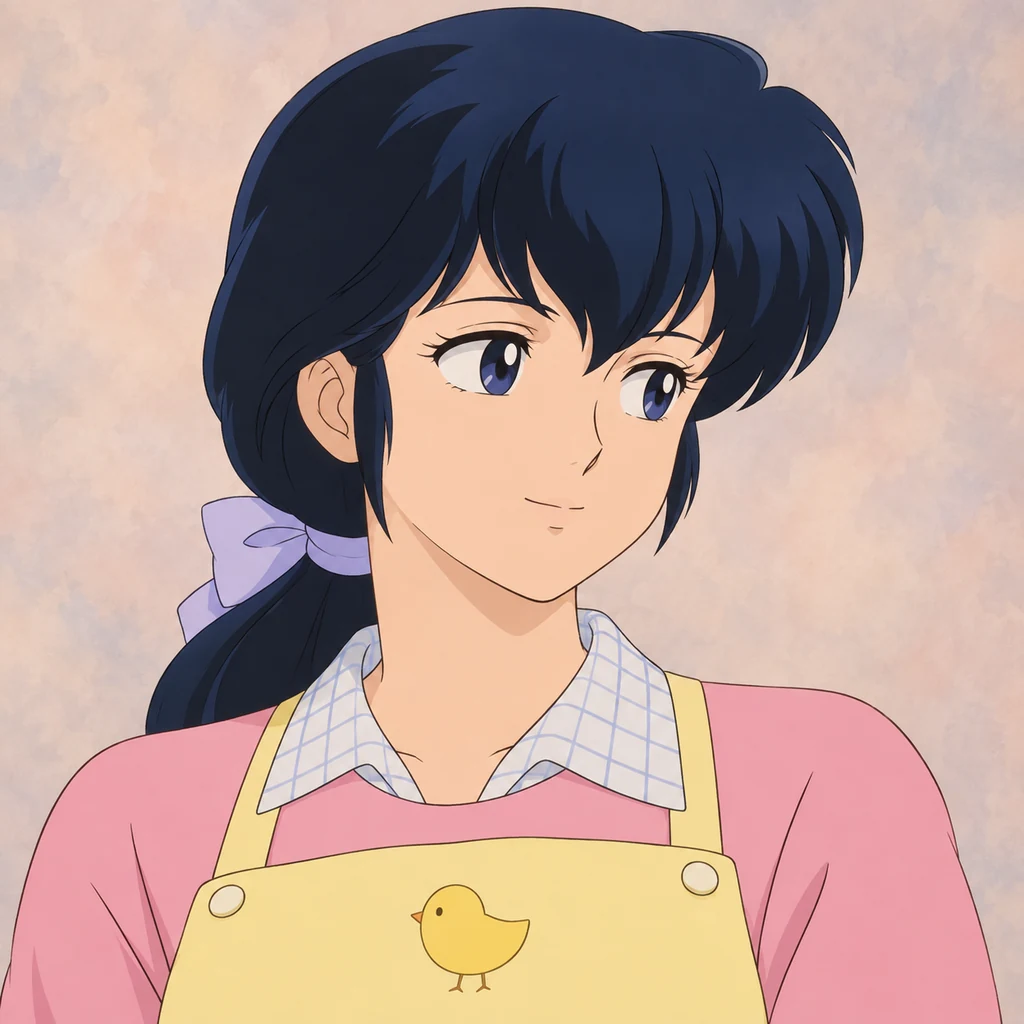
The design follows the adult manager from the 1986–1988 TV anime, voiced by Sumi Shimamoto: tied-back blue-black long hair with a layered fringe, a pale lavender bow, blue-violet eyes, pink long sleeves over a checked collar, and a yellow chick apron. The artwork here is unofficial AI-generated fan art. A full-length dark-blue skirt and simple closed shoes are original styling for areas outside the reference frame.
[Reader interpretation; late-story spoilers] Episode 93 keeps Kyoko’s love for her late husband present while distinguishing Godai from a replacement for him. One reading is that renewed intimacy can coexist with remembrance. This is an interpretation grounded in the story, not a claim about Takahashi’s declared intent or a universal fan consensus.