 NO.691ANIME
OOTDYan Lingji
NO.691ANIMEANIME OOTD / CHARACTER ARCHIVE
Yan Lingji
Nine Songs of the Moving Heavens ↗ / 2016
Fire and red hairpins introduce Yan Lingji. Her relaxed exchanges in Xinzheng conceal Baiyue loyalties and a determination to regain control of her own actions.
Baiyue fire wielder
My figure room →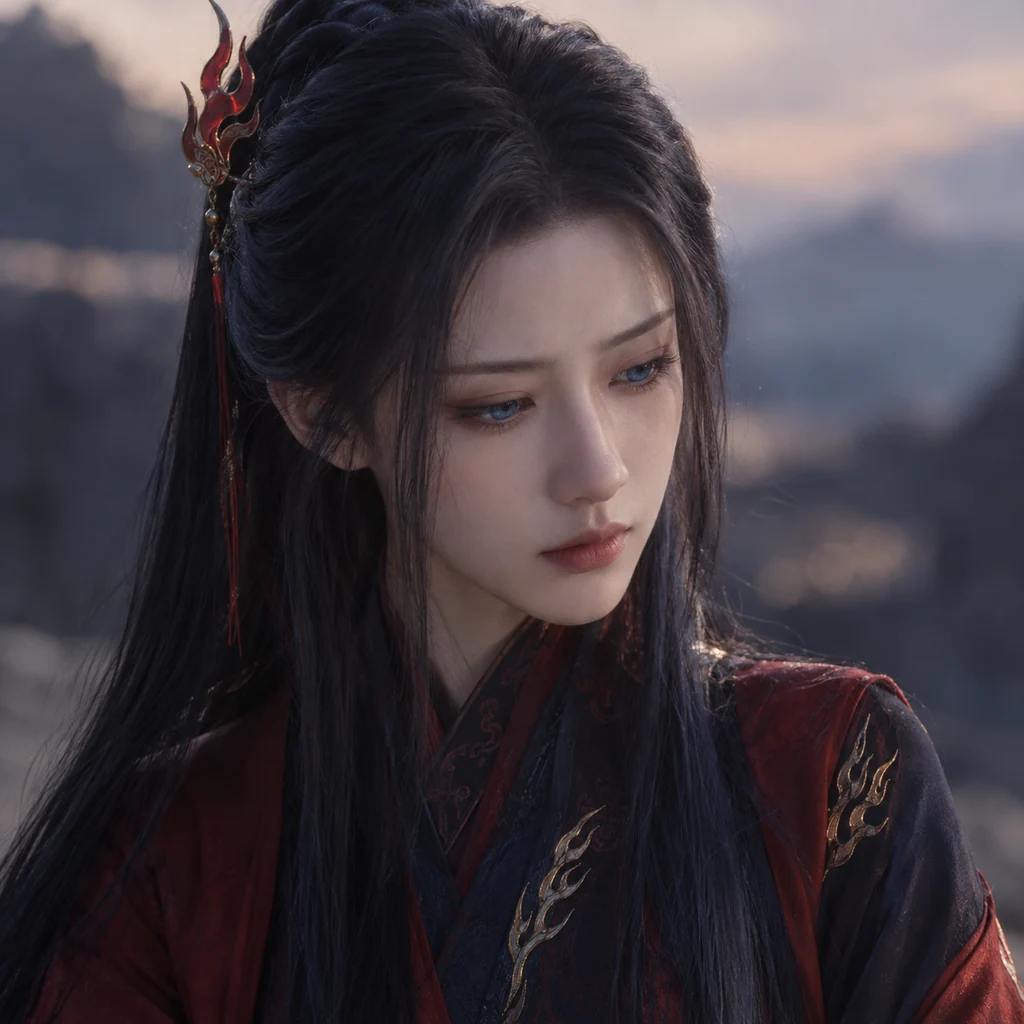

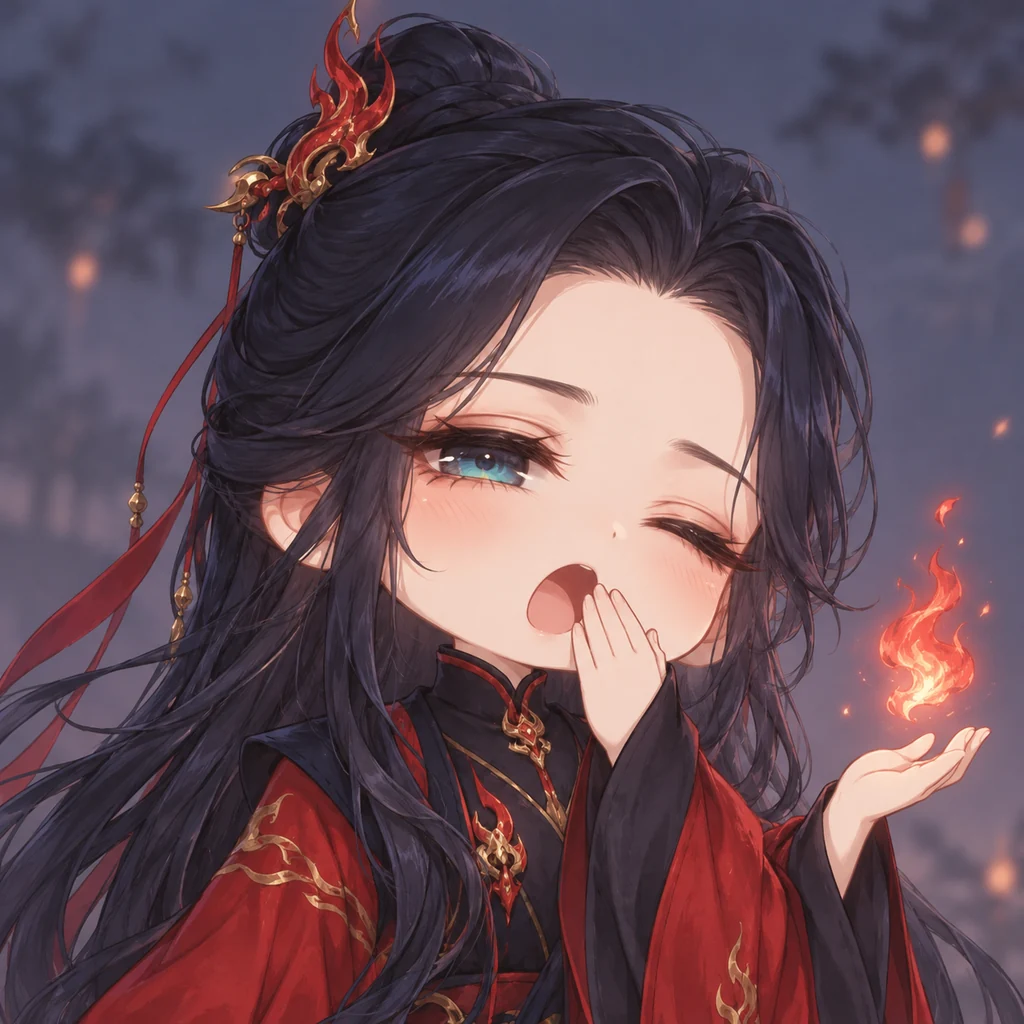
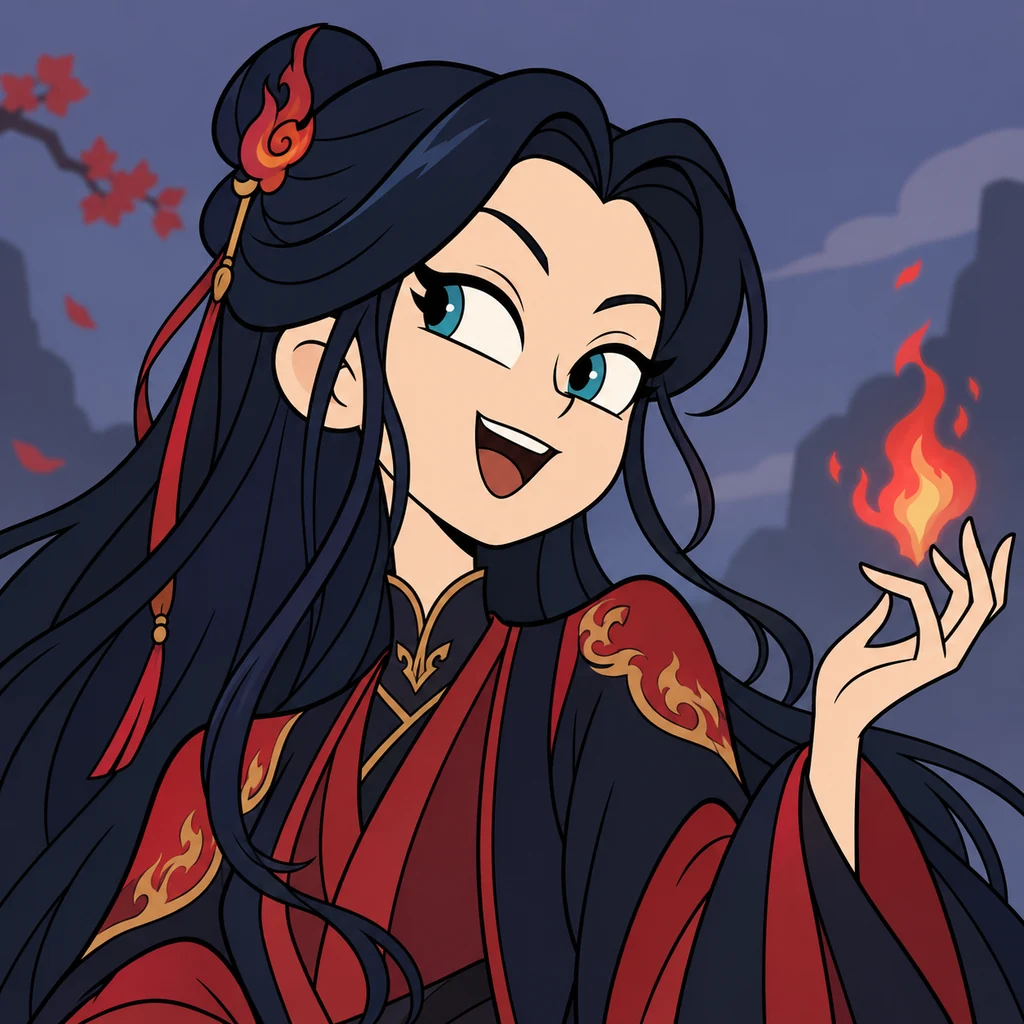
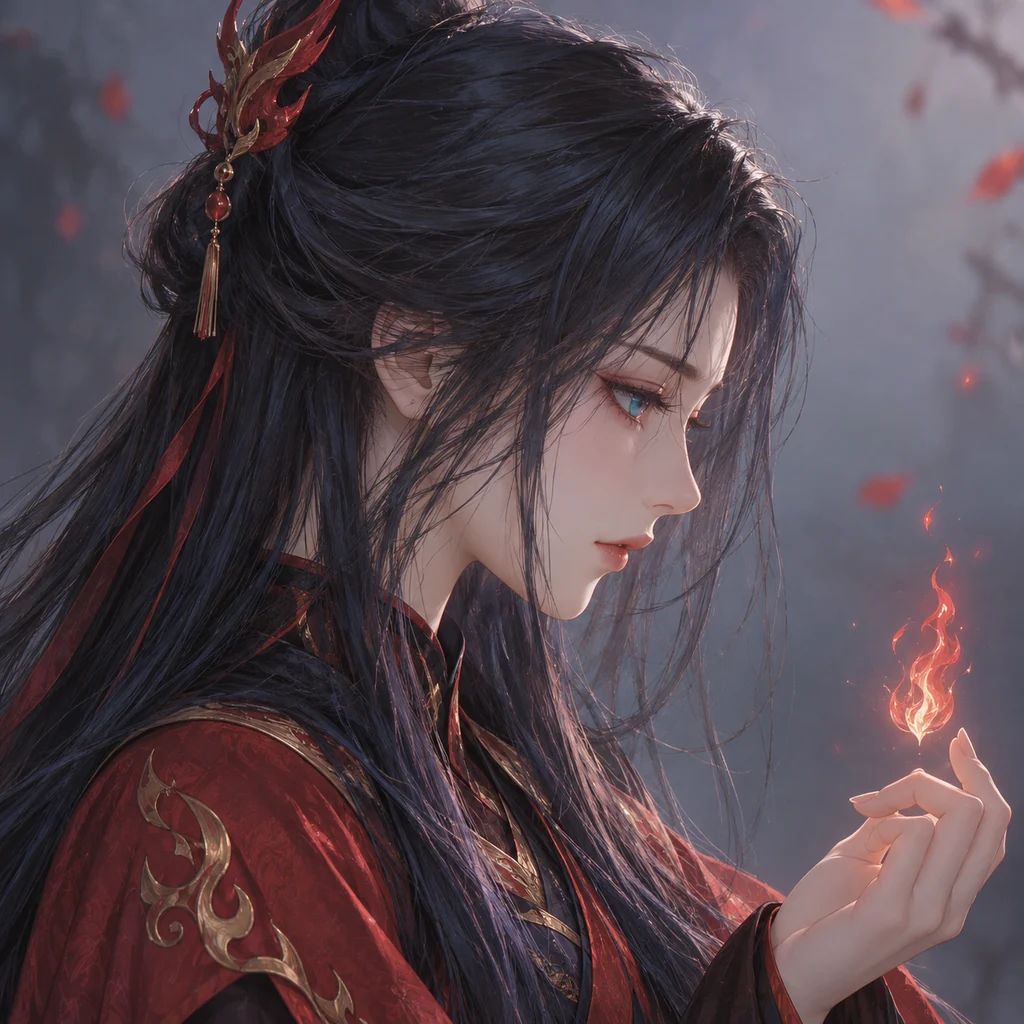
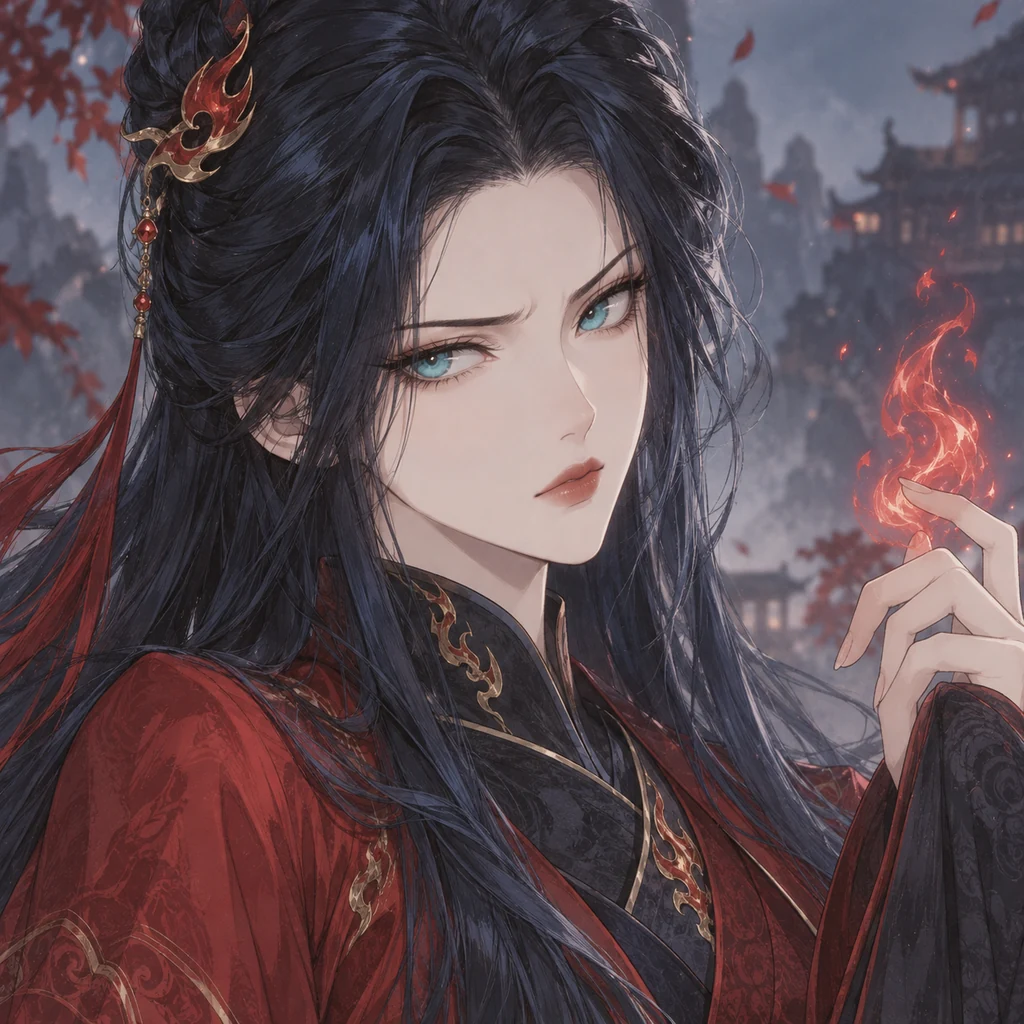
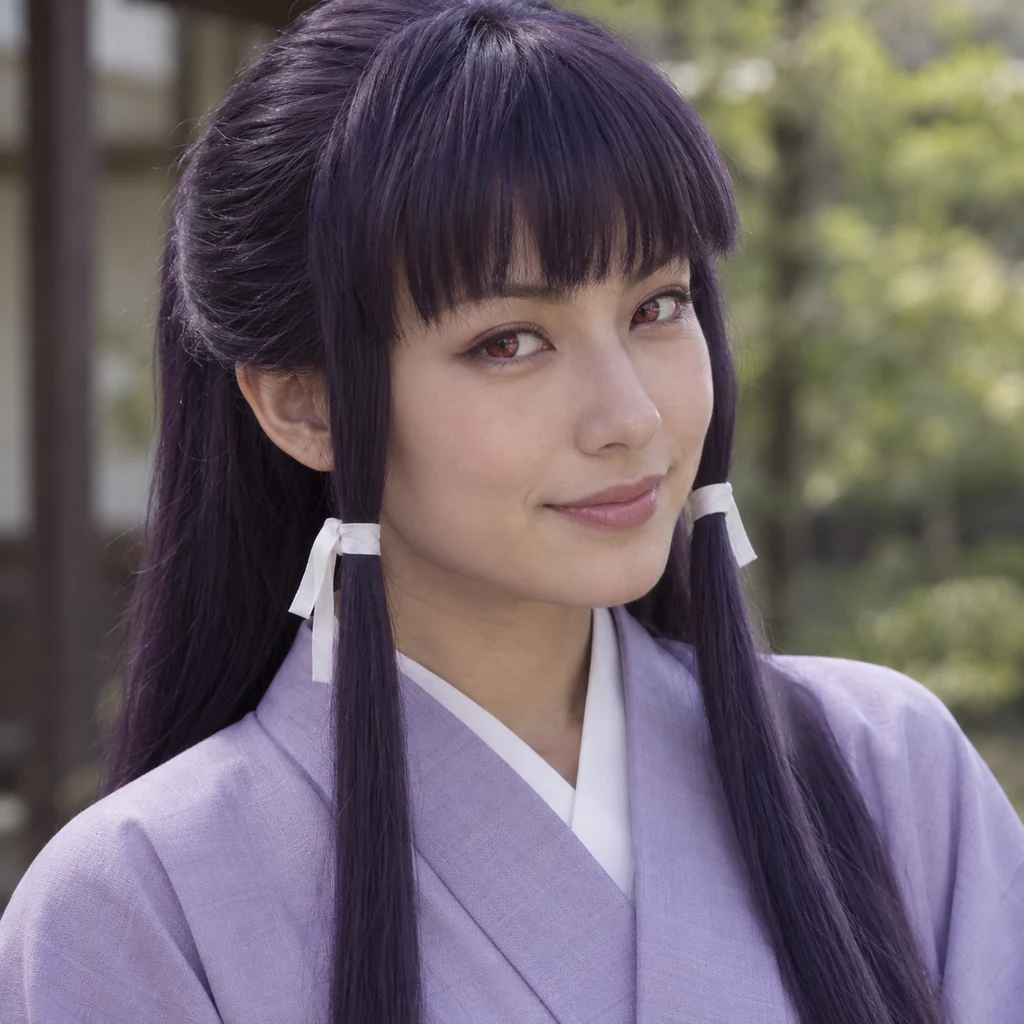
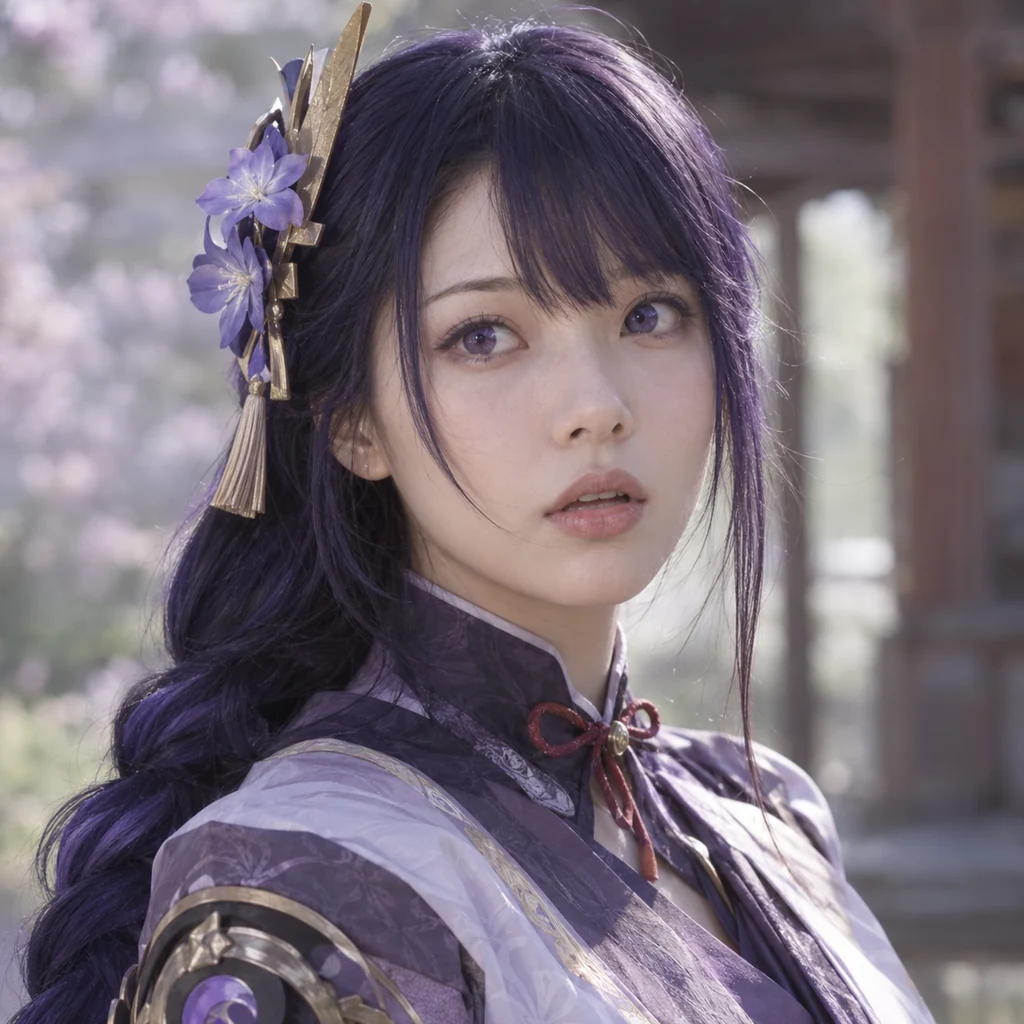
AI-assisted illustrations · Not official anime stills

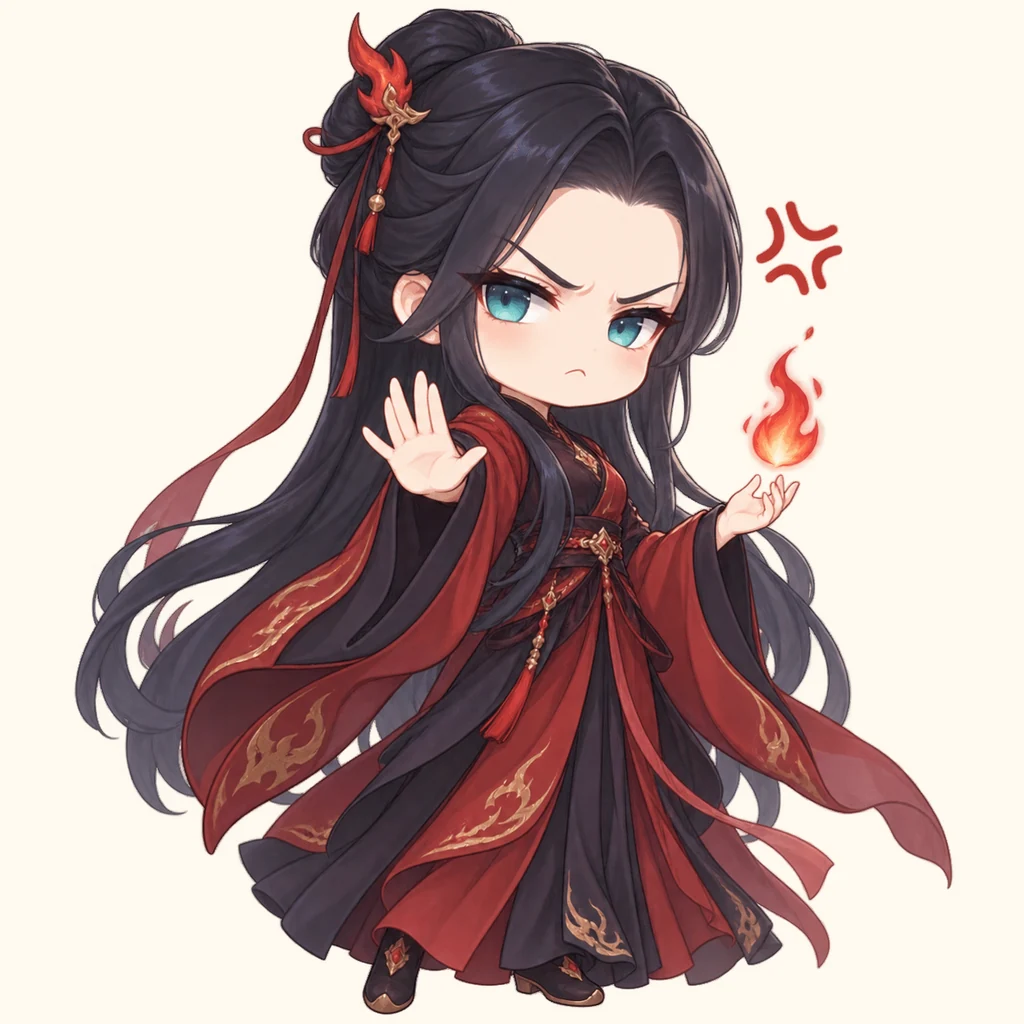
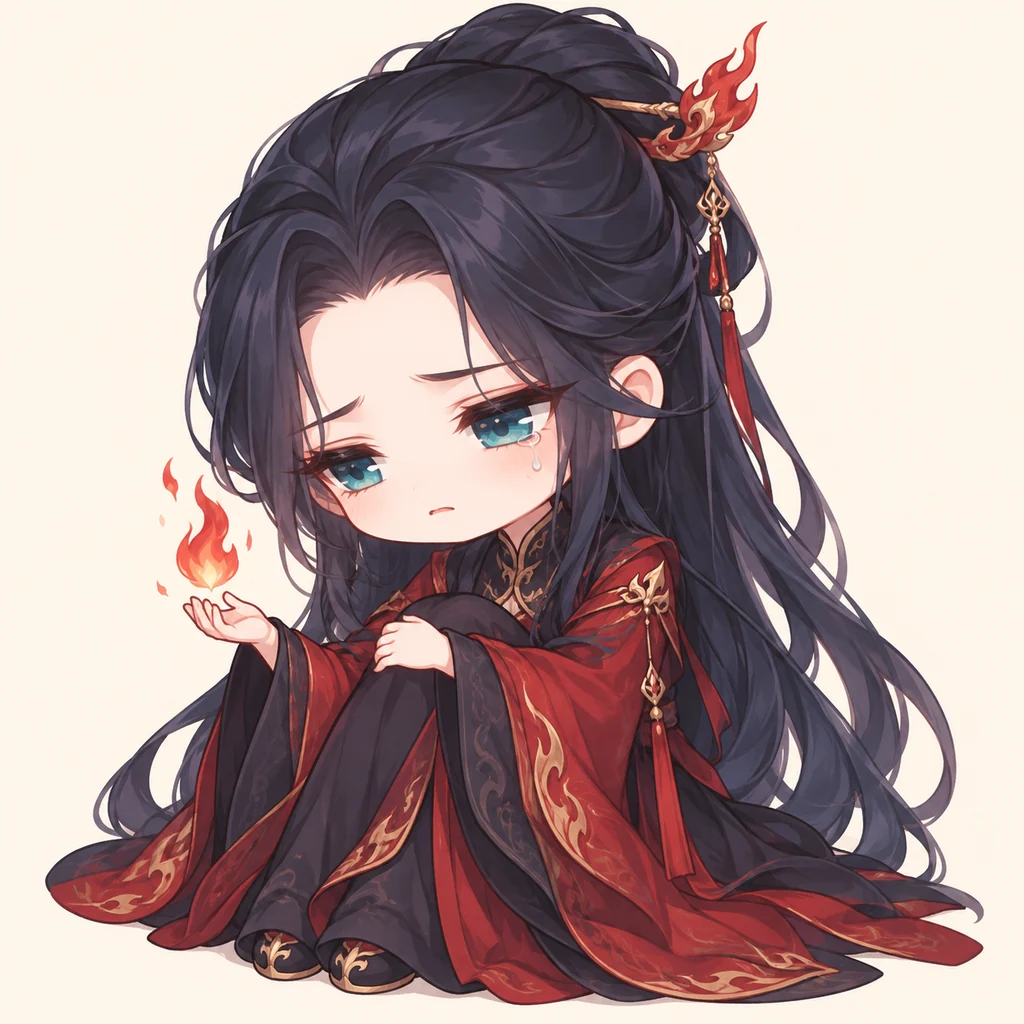


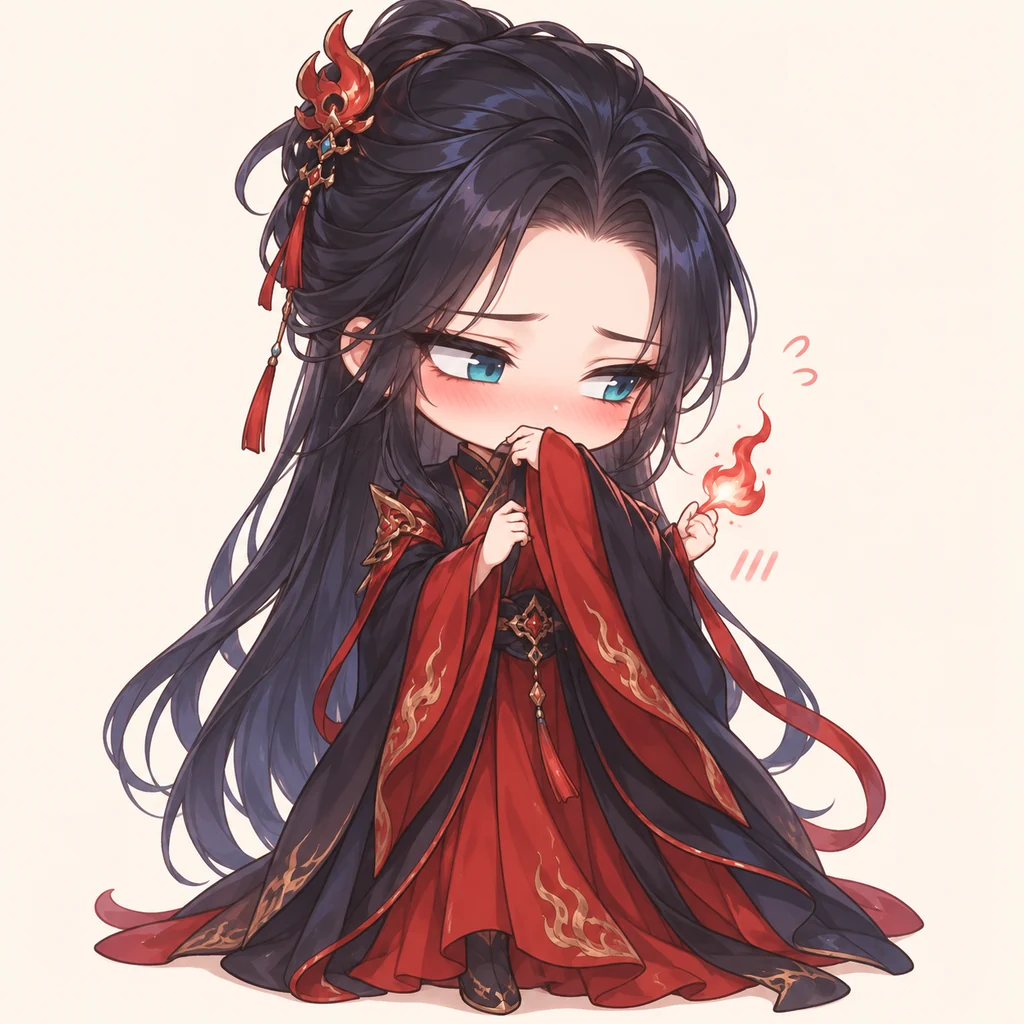
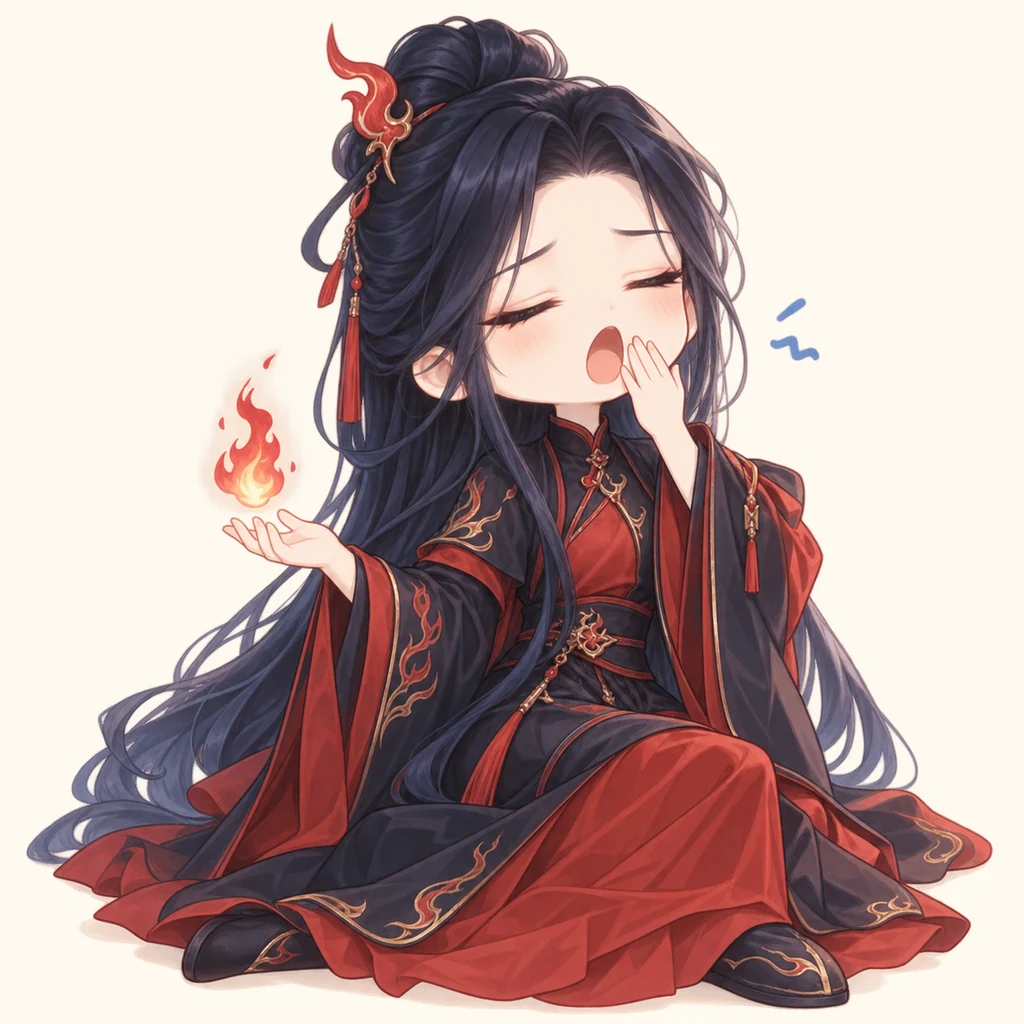
Yan Lingji first appears in episode 20 of Sparkly Key’s wuxia animation Nine Songs of the Moving Heavens, also known as Tian Xing Jiu Ge. She comes from Baiyue and serves its former crown prince Tian Ze. Fire manipulation and red hairpins define her entrance. The series is a companion to The Legend of Qin, set before Qin’s unification; she is not a member of the Qin palace.
She often tests opponents through relaxed conversation, letting a calm tone disguise danger. Loyalty toward Tian Ze, teasing toward Honglian and curiosity about Han Fei each reveal a different side. More revealing than calling her a mysterious beauty is watching how she tries to regain control after imprisonment and manipulation.
After being freed from captivity she rejoins Tian Ze’s group and enters the struggle in Xinzheng, capital of the ancient state of Han. A palace confrontation, the crown-prince crisis and clashes with Bai Yifei connect Baiyue’s grievances to Han politics. Her fire techniques also involve memory, illusion and intelligence, giving her a role beyond a decorative performance.
Tian Ze is the leader she follows. Bai Du Wang, Qu Shi Mo and Wushuang Gui share her faction, not an established blood relationship; Wushuang Gui helps free her. Bai Yifei is an opponent and captor, while Han Fei negotiates and tests boundaries with her. None of these interactions establishes a husband. Glimpses of childhood and family remain deliberately incomplete.
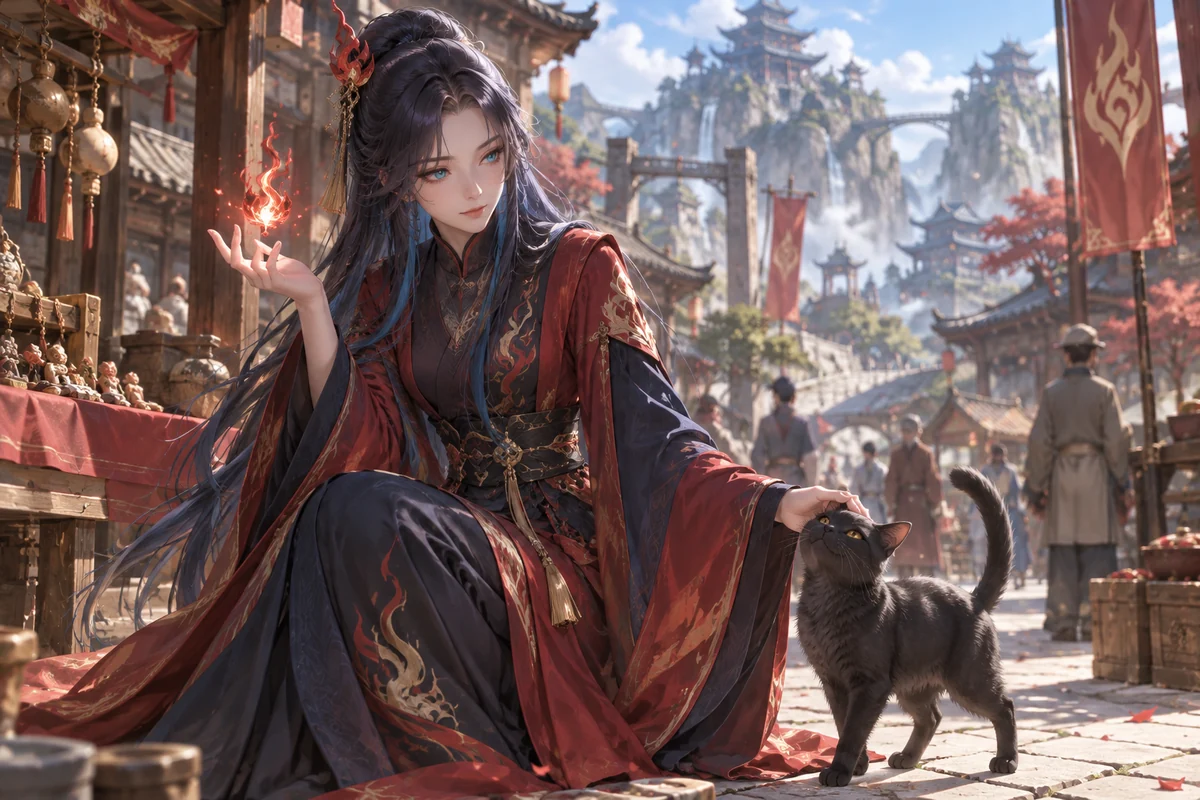
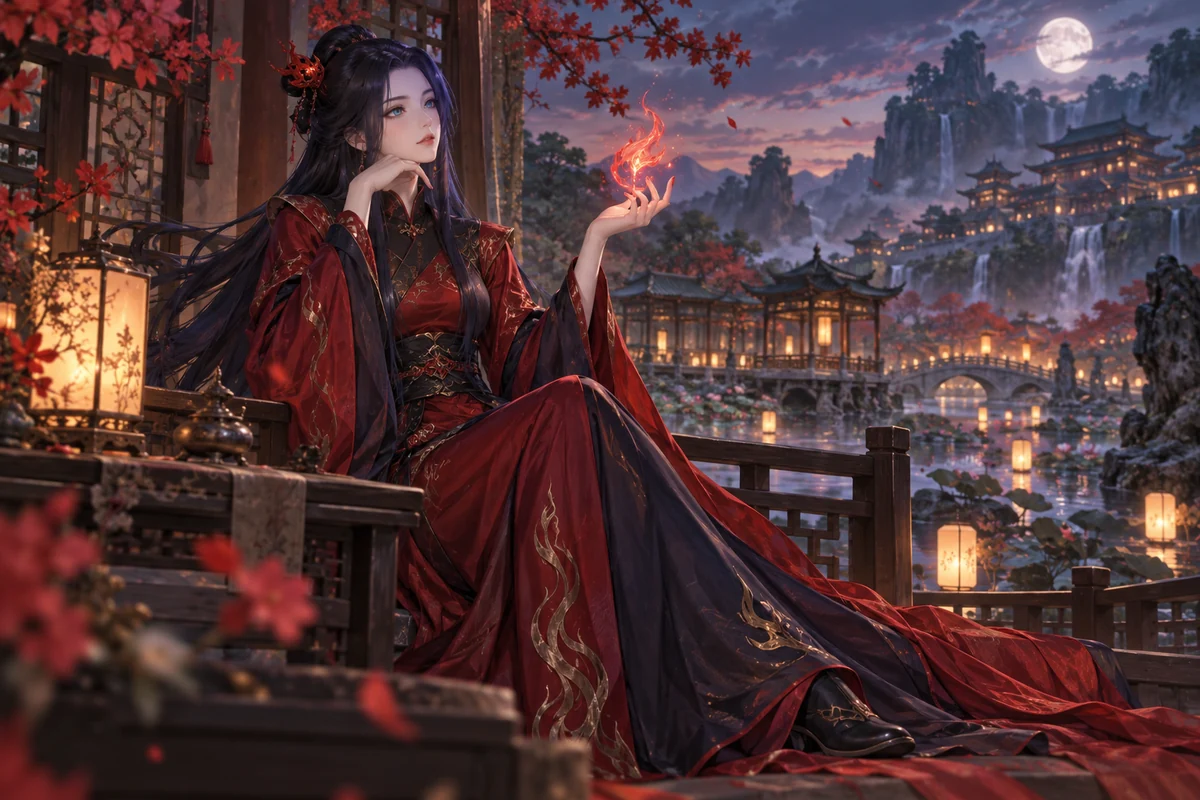
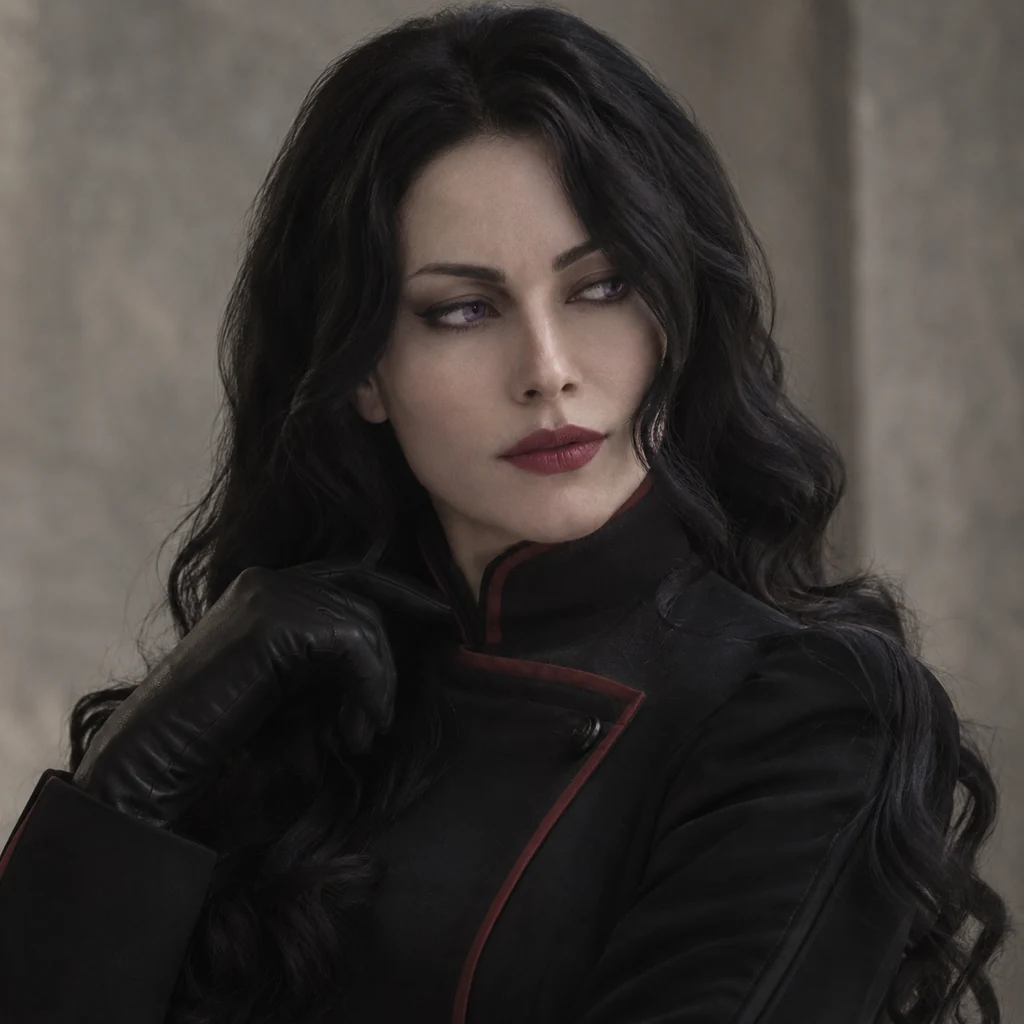
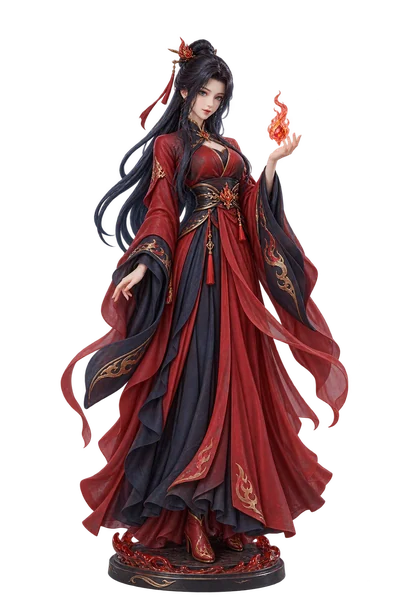
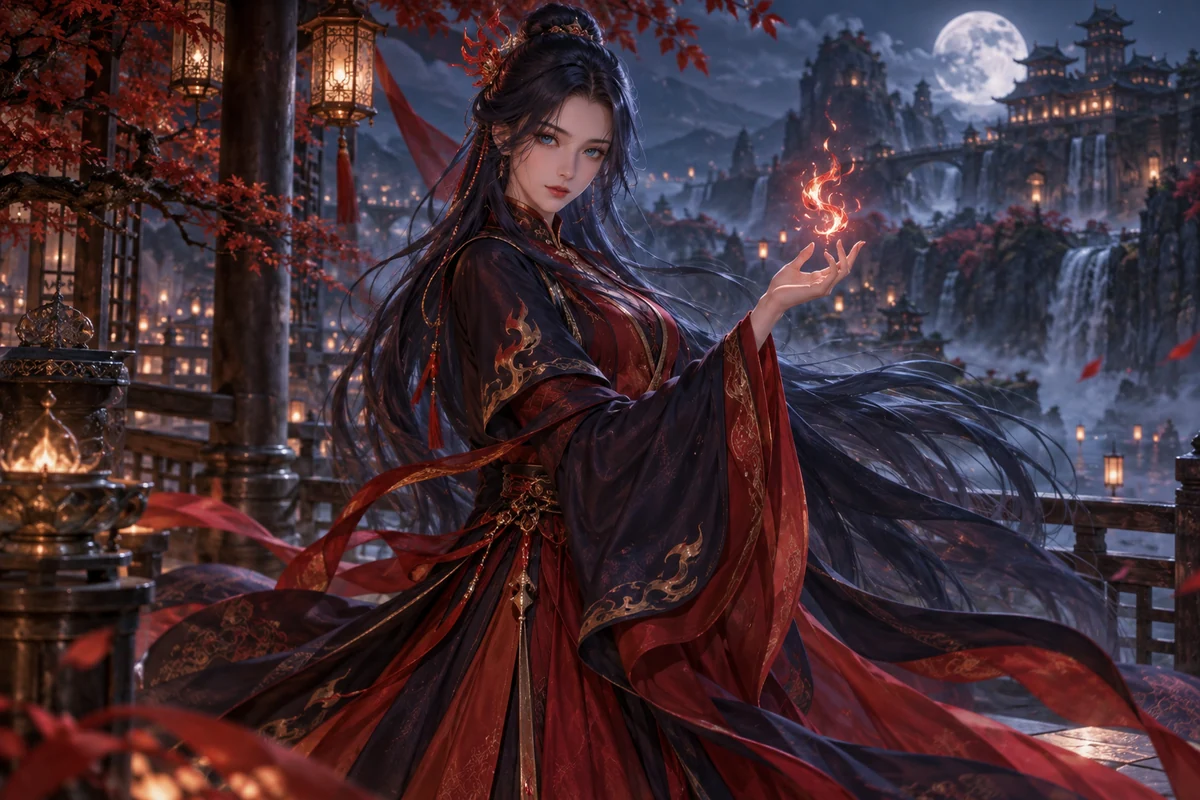
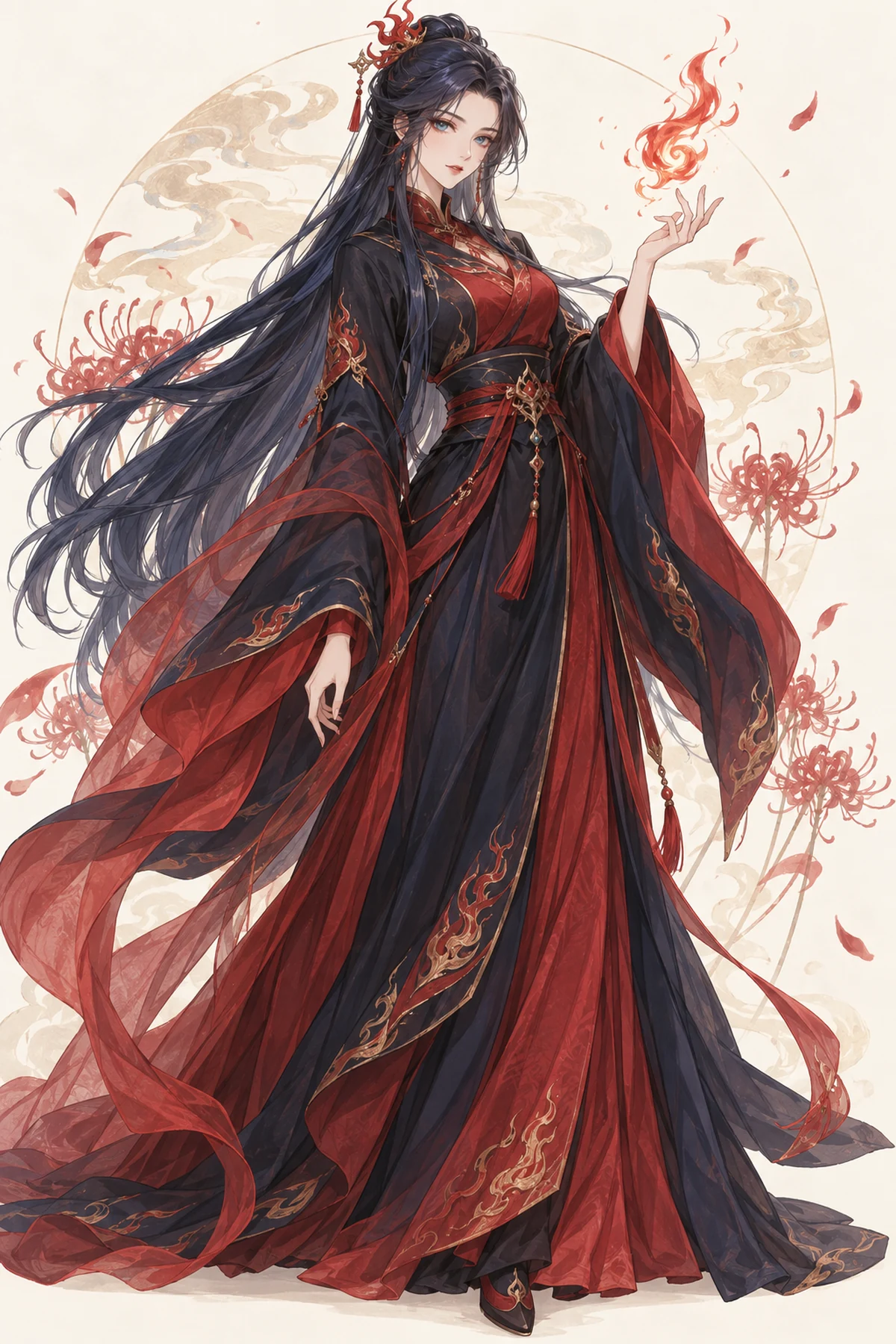
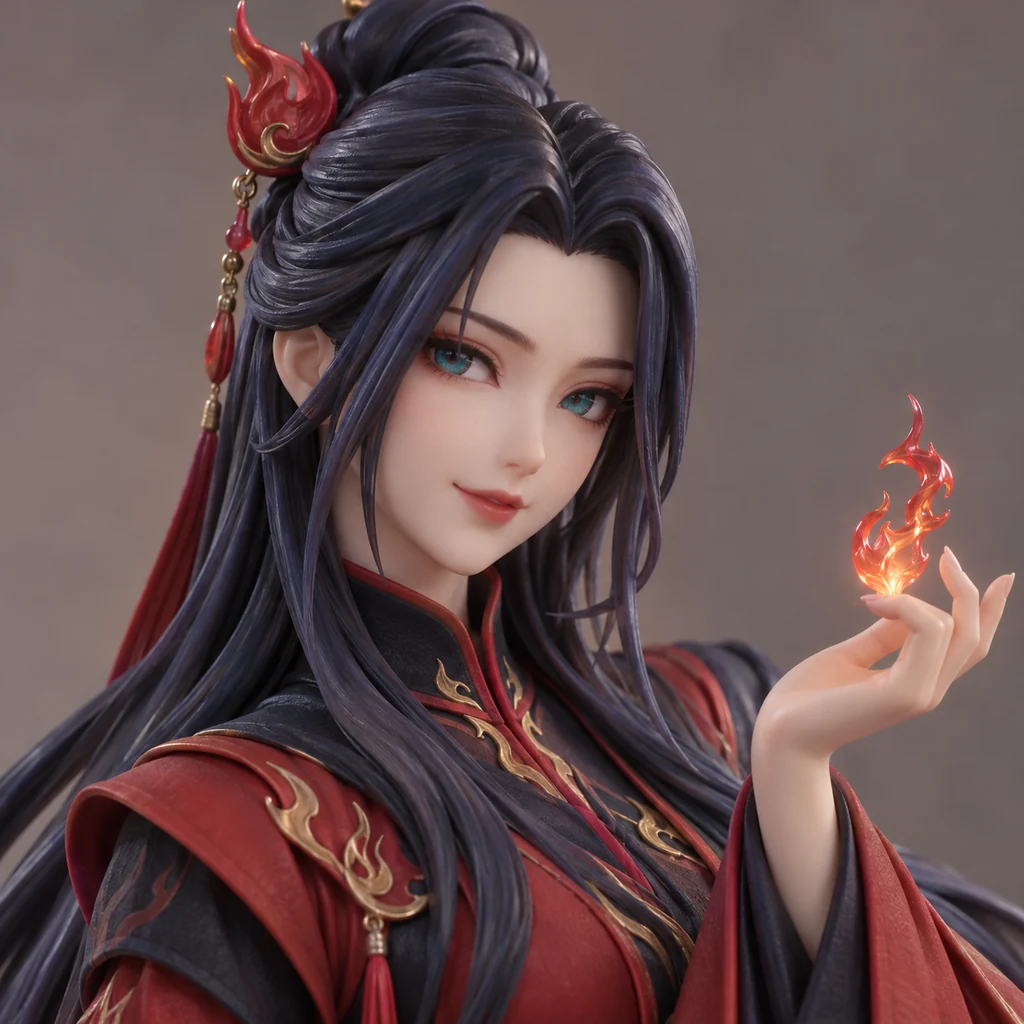
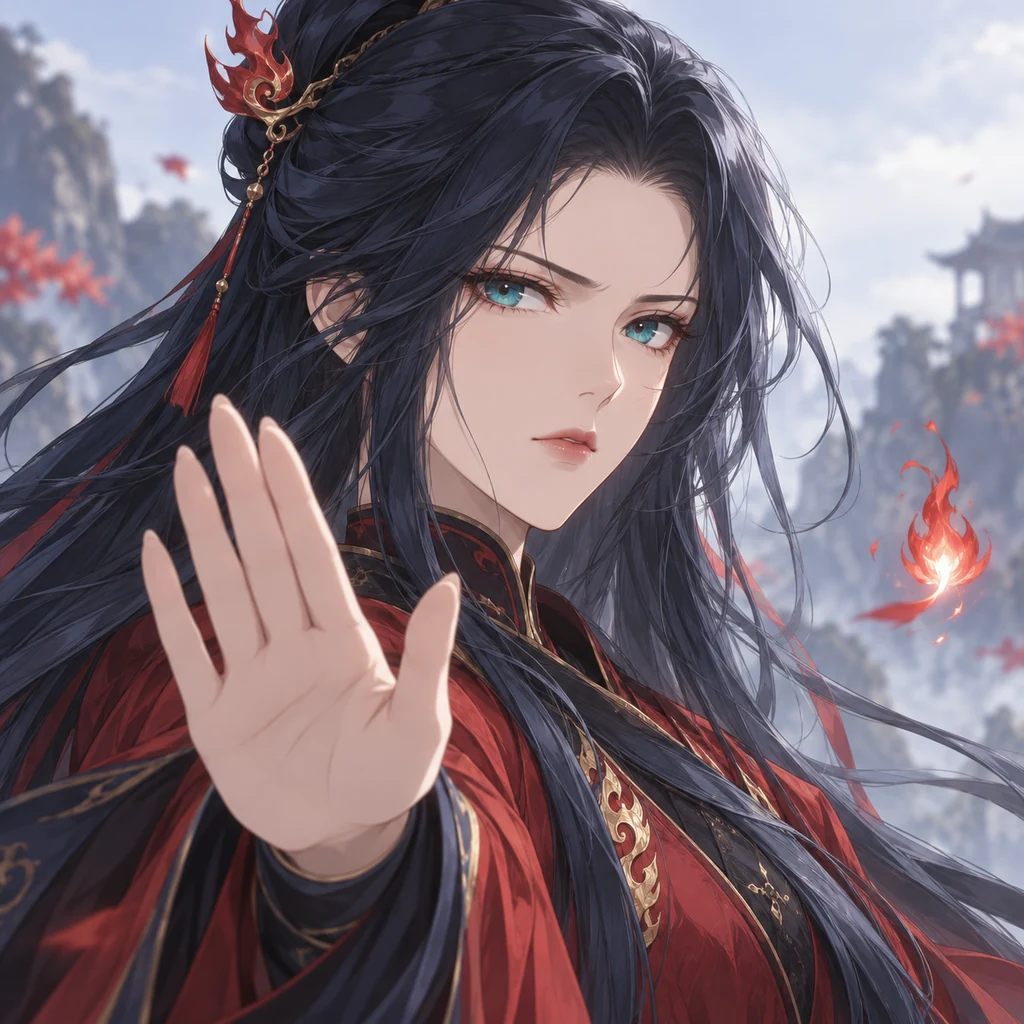
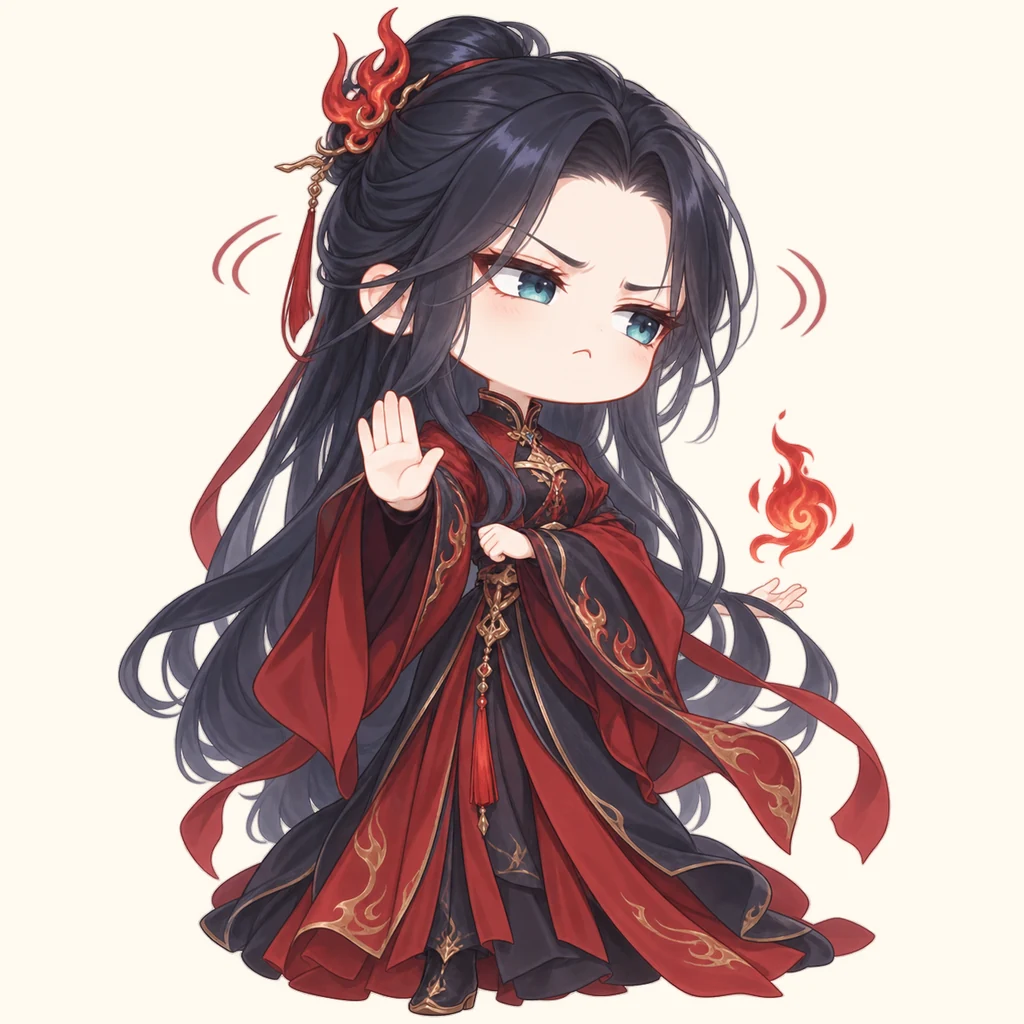
Long dark hair, turquoise eyes, red hairpins and flame motifs distinguish her in an ensemble. Red and pale-blue costumes belong to different scenes rather than different characters. This fan set uses fully covering red-and-dark robes and a small flame as identity cues, then varies the medium through photographic adaptation, sculpture, anime, minimal icons, chibi and profile portraits.
One useful rewatching angle is the contrast between her fire and Bai Yifei’s ice: color, apparent temperature and physical distance shift with the powers. That visual opposition does not establish an official romance. Her exchanges with Han Fei are also interesting as contests over the rhythm of a conversation, without treating every joke as a confession.